The Vedic worldview has a very particular idea of self-sufficiency, one that does not require us to know everything, reject guidance, or somehow navigate the complexity of life entirely on our own.
Read More
The Vedic worldview has a very particular idea of self-sufficiency, one that does not require us to know everything, reject guidance, or somehow navigate the complexity of life entirely on our own.
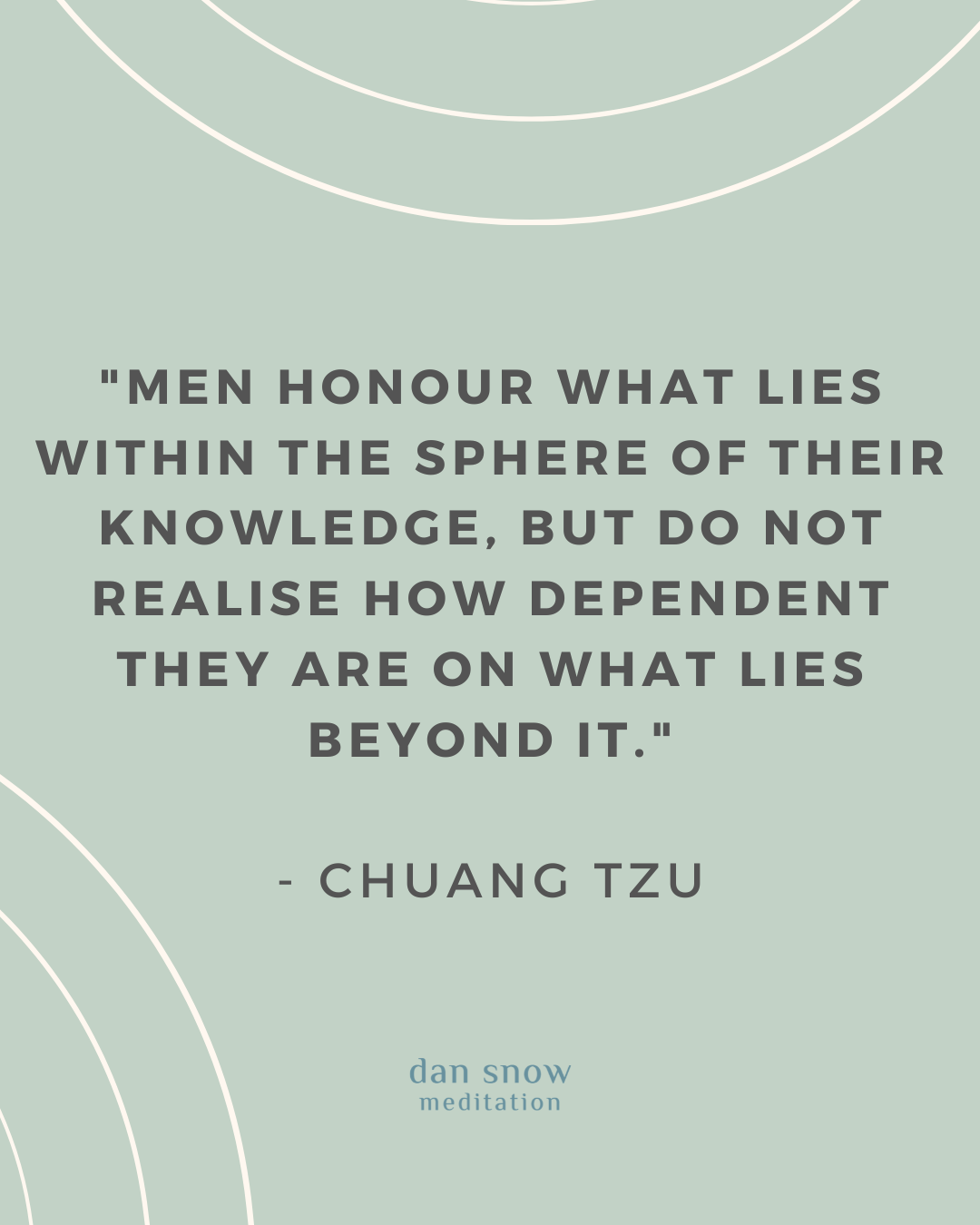
Read MoreThe intellect naturally places great value on what it can explain, measure and organise. We spend years gathering knowledge, refining ideas and developing expertise, and these are all worthwhile pursuits.
Read MoreRumi once asked his master, Shams: “How did you finally find peace? Shams replied: "I made a promise to calm myself, not the world around me. And a miracle happened, the world around me grew calm as well." This points to one of the great misunderstandings of modern life. We imagine that peace will arrive when circumstances improve. When other people behave differently, when our workload reduces, when the children settle down, and when the world finally becomes reasonable.
Read MoreLeonard Cohen once wrote, “If you don’t become the ocean, you’ll be seasick every day”. Cohen's line points to what happens when our awareness becomes confined to the surface level of life. Thoughts, emotions, responsibilities, successes, disappointments, and constant change toss us around like waves on the sea. When our sense of self is tied only to those movements, life can feel unstable, unpredictable, and exhausting.
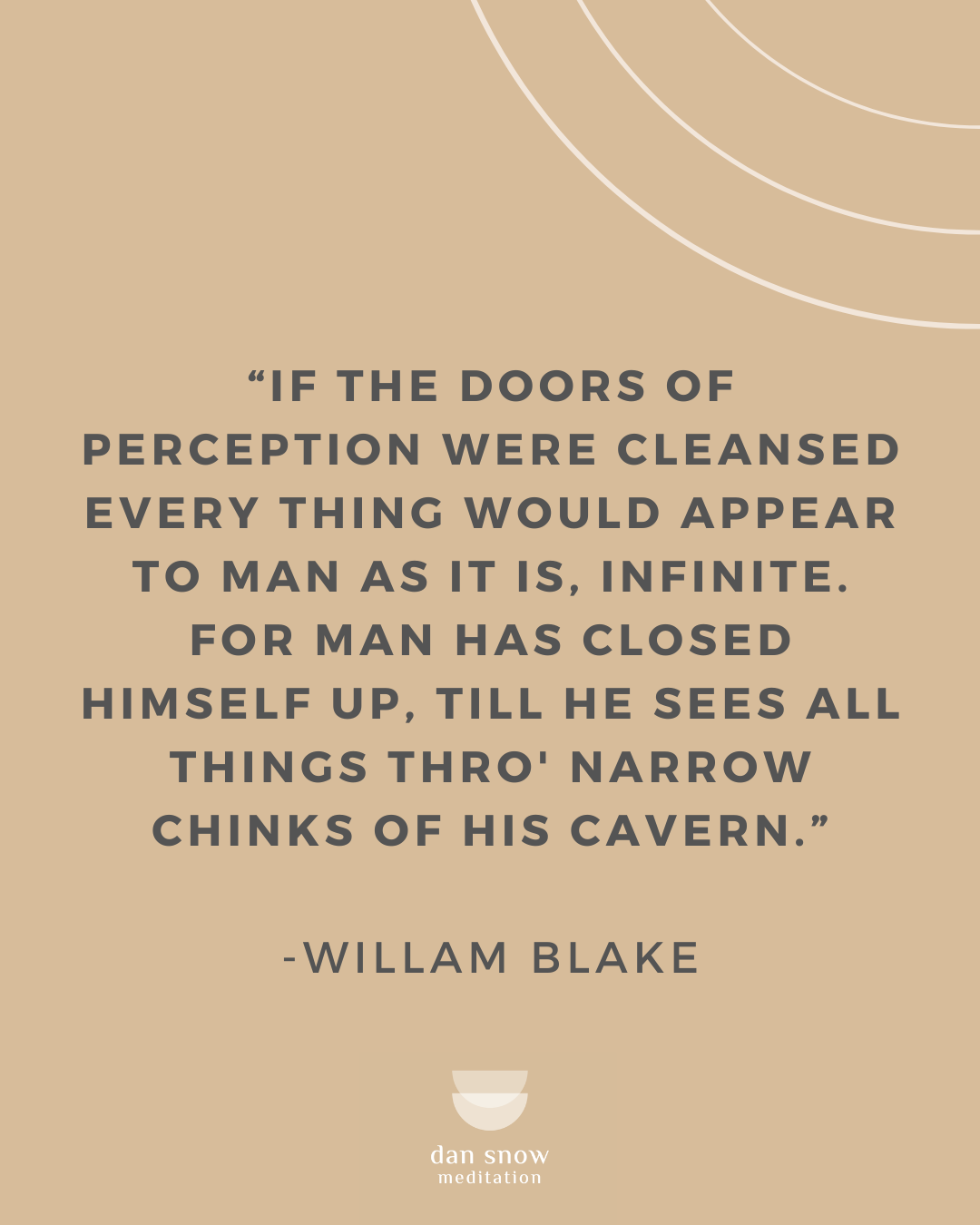
Read MoreWilliam Blake’s observation points toward a fundamental truth of human development. The infinite is ever-present, yet our ability to perceive it depends upon the adaptability and refinement of the nervous system.
Read More“A society grows great when old men plant trees in whose shade they shall never sit.”
The passing of Neale Daniher brought this Greek proverb to mind because there are certain human beings whose lives begin to operate far beyond the boundaries of personal ambition, fear, or the instinct for personal survival, and instead become devoted to building something enduring that future generations will inherit.
Over the last few weeks I’ve moved through four time zones and three major altitude shifts. Experiences like this always reinforce how essential Vedic Meditation has become for adaptation because travel places enormous demands on the nervous system through disrupted sleep, constant stimulation, environmental change and the physiological load of altitude transitions… not to mention jet lag as well!
When swimming in a creek a few weeks ago with friends we noticed something subtle yet fascinating. The surface water felt cool and fresh, yet when we dipped our hands deeper, the water became warmer & slightly salty, as if we had crossed an invisible boundary within the same body of water.
Read More“Of course, you can’t force your mind to be silent. That would be like trying to smooth ripples in water with a flatiron. Water becomes clear and calm only when left alone.” - Alan Watts
There is something deeply comforting in this image, because so much of modern life trains us to manage, improve, and optimise every aspect of our experience, including the movements of the mind. We subtly approach meditation with the same habit, assuming that calm will arrive through effort, discipline, or control. Yet the metaphor of water reminds us that clarity is revealed through allowing.
Read MoreVedic Meditation is a simple but significant act. We are allowing the nervous system to settle back toward its own natural order, rather than continually driving it with effort or urgency. This state is not something distant or special, and it is not created by the practice. It is already present beneath the activity of the mind and the momentum of reactivity. Meditation simply allows us to return to it.
Read MoreThe Truth About Karma
In the Vedic worldview, karma is often misunderstood, because many of us hear the word and imagine a cosmic scoreboard measuring our behaviour, yet the original meaning is far more subtle and far more liberating. Karma refers to action that binds, action taken from stress, fear, confusion, or ego that pulls us out of alignment with the natural flow of life, creating a small knot in our system. The knot is not wrong or bad, it is simply a configuration that restricts our freedom to move as fluidly as we could.
Read MoreNature Does Not Force Calm, It Allows Motion
Working with boys as an OT has taught me something about the intelligence of nature and the way it restores balance when we give it the space to do so.
There is a belief that emotional maturity comes from stillness, from sitting quietly, from holding it together and thinking harder. But boys are not built to regulate through stillness first.
Read MoreWater the Root To Enjoy the Fruit
One of my favourite metaphors from Maharishi Mahesh Yogi is this: if you want a tree to thrive, you don’t water every single leaf, you water the root, and the whole tree flourishes. Water the root, to enjoy the fruit. Spring is a perfect reminder of this wisdom. All around us, the trees and plants are bursting into new growth. But none of it would be possible without the nourishment happening at the roots, quietly and unseen.
Read MoreOffence Is a Choice: A Vedic Perspective on Criticism and Bullying
When someone says something unkind, our first instinct may be to take it personally. This is especially true for young people, whose identities are still forming. For teens and tweens, particularly those who are neurodivergent, the social world can feel threatening, and criticism can cut deeply. Nowadays, there is the added dynamic of group chats, social media and gaming.
Read MoreRest as Readiness
After 15 years as a paediatric occupational therapist — and 12 years as a Vedic meditator — I’ve come to see that adaptability isn’t just a mindset. It’s a physiological capacity.
Read More𝗧𝗼𝗼 𝗕𝘂𝘀𝘆 𝘁𝗼 𝗠𝗲𝗱𝗶𝘁𝗮𝘁𝗲? 𝗧𝗵𝗶𝗻𝗸 𝗔𝗴𝗮𝗶𝗻.
Saying you’re too busy to meditate is a bit like saying you’re too hungry to eat. Meditation isn’t just another thing to fit into your schedule—it’s the thing that makes the whole schedule feel lighter. It’s the balm that soothes overwhelm and the landscaper that gently clears anxiety from the roots of your nervous system.
Read MoreThe Cycle of Becoming : Growth Through Renewal
I recently was sent a YouTube clip of Rabbi Dr. Abraham Twerski explaining the way a lobster sheds its shell. It offered a quiet reminder that growth often arrives disguised as discomfort. Stories have a way of doing that—threading themselves into our lives, waiting for the right moment to whisper their wisdom. The lobster, a soft-bodied creature, lives within a rigid shell. That shell is its armour, its protection. But there’s a catch—the shell doesn’t grow.
Read MoreMeditation Is Not Hard
One of the biggest myths about meditation is that it’s hard. That you have to concentrate, control your thoughts, or ‘empty the mind.’ Not true. In Vedic meditation, we don’t fight the mind—we work with it. No effort, no struggle. You’re given a mantra, a specific sound, and that’s what does the heavy lifting. It naturally guides your mind into a state of deep rest. No forcing, no trying—just an easy, automatic process.
Read MoreWhat you need to know about the stress response (Part 2)
The human brain is incredibly intelligent, and its response to stress is no exception. When the stress response is triggered, the brain takes a snapshot of all the sensory information we receive in that moment. If we encounter that sensory stimulus again, the brain will trigger the stress response earlier, allowing us to prepare for fight or flight sooner. This process is known as a premature cognitive commitment (PCC).
Read MoreBeing Good At Vedic Meditation
Being good at Vedic Meditation, is not about diving deep every time you sit but about letting go and allowing the experience to unfold. My practice? Just sitting twice a day, no matter what. No trying… just no resisting. Simple, natural, innocence. Good things are happening, whether it is shallow or deep.
Read More